Modeling Community College Pathways
Motivation
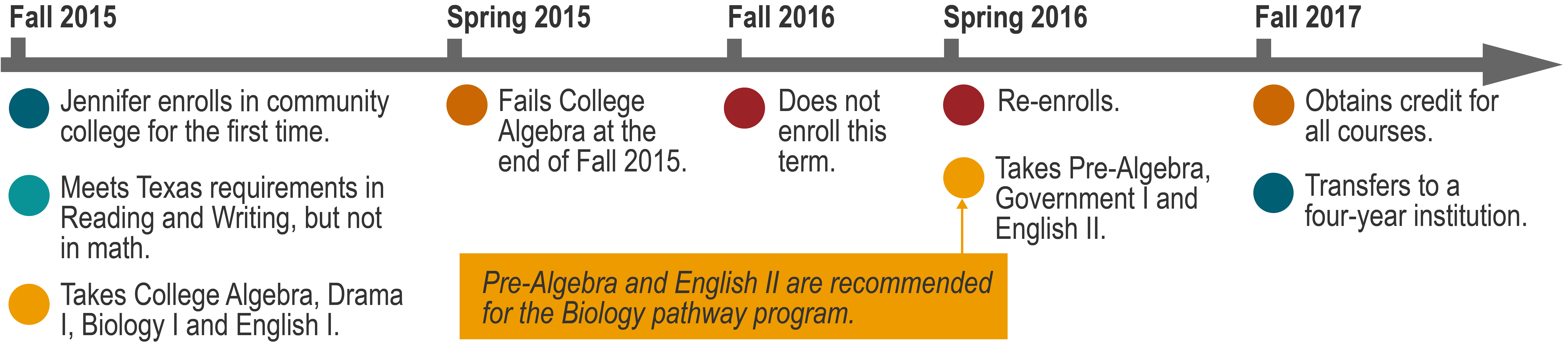
A student pathway is the longitudinal trajectory of attributes, actions, and outcomes that unfolds over an academic career — background preparedness, course selections, grades earned, enrollment gaps, and whether a student drops out, earns a degree, or transfers to a four-year institution. These pathways are especially complex at community colleges, where students arrive with widely varying levels of academic preparation, balance work and family obligations, and pursue goals ranging from workforce certificates to four-year degrees.
Overview
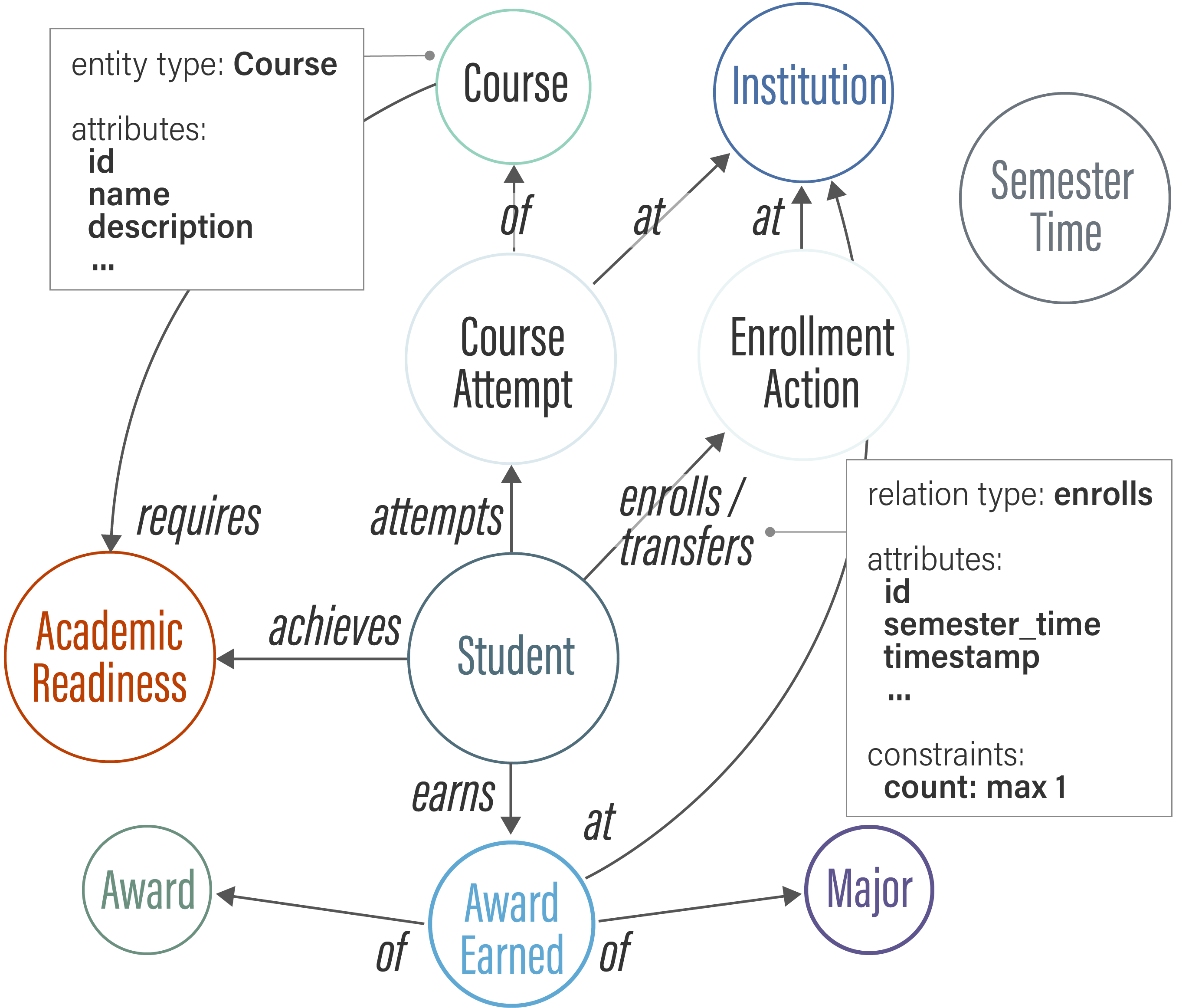
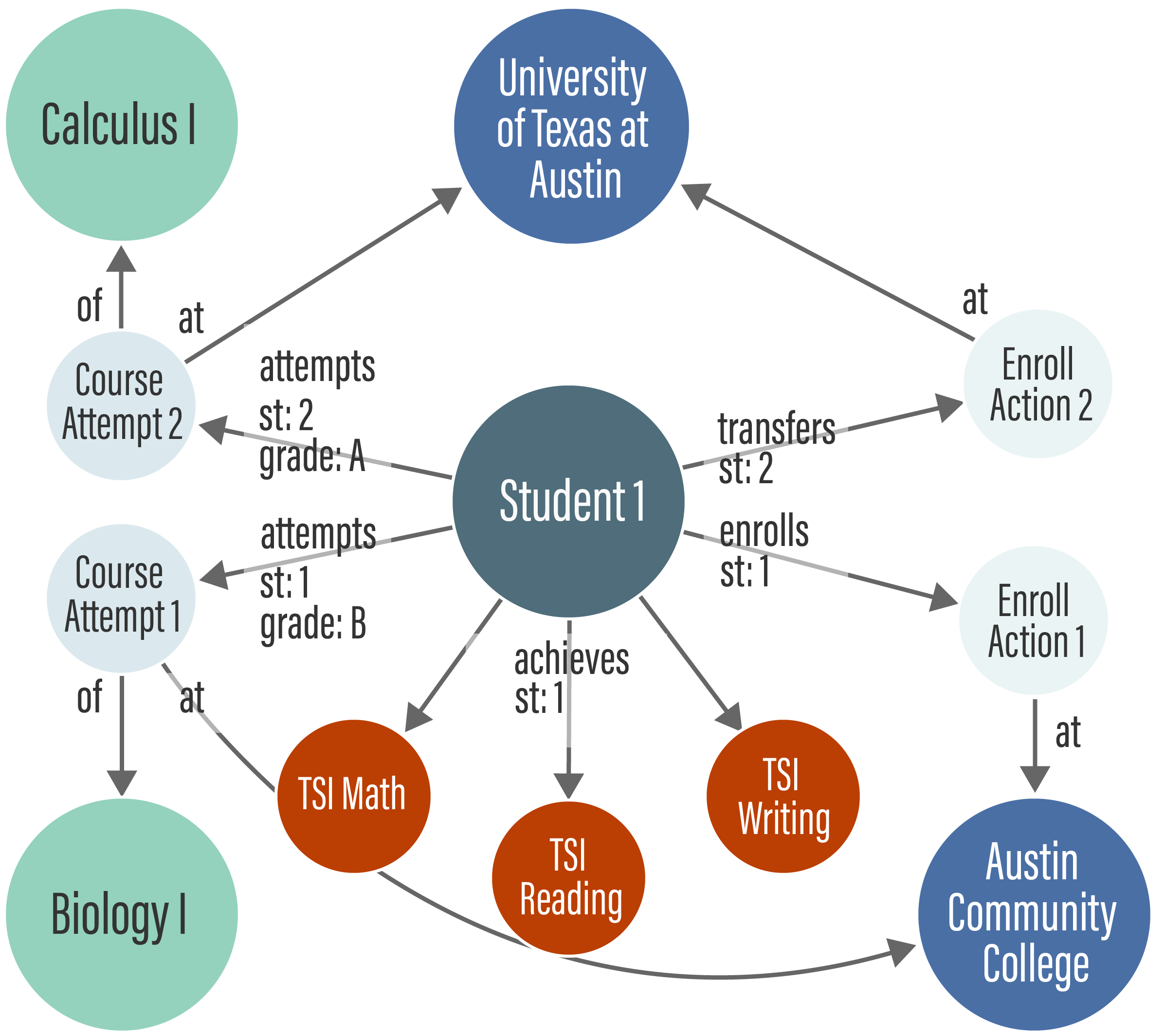
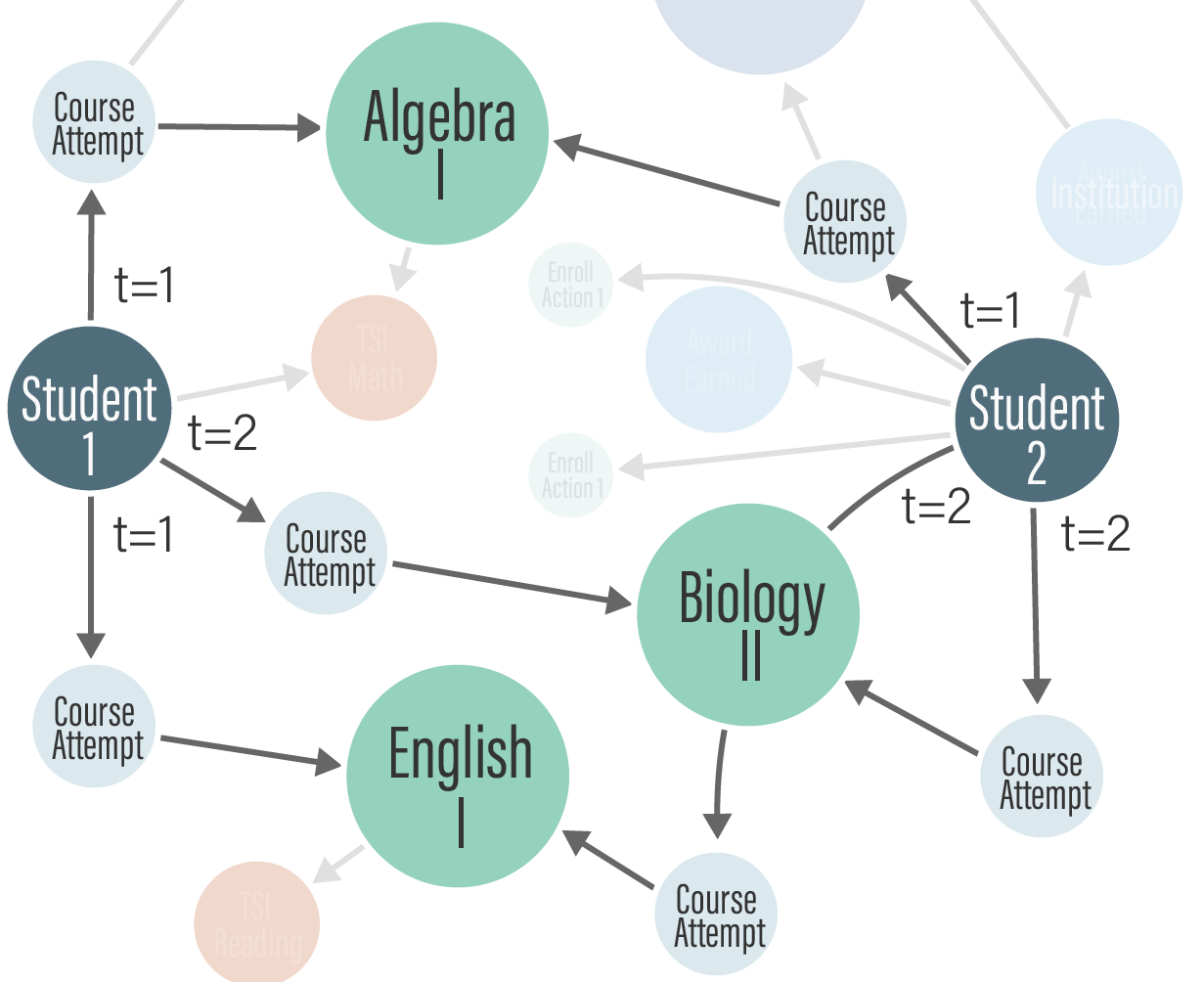
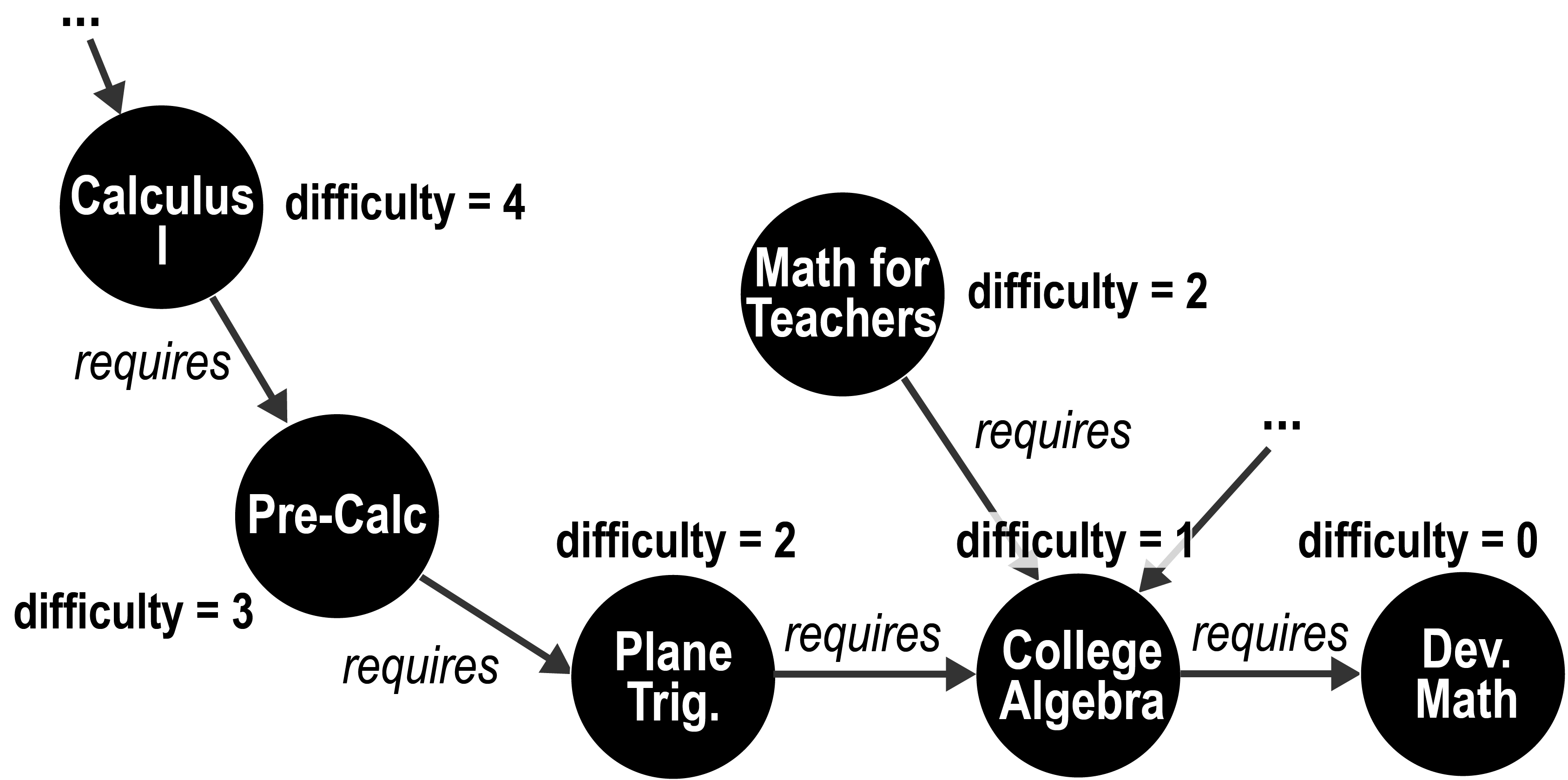
This project pursues two lines of work. The first is modeling these dynamic pathways at scale, across time. We propose the paradigm of an Educational Digital Twin: a set of information constructs that mimic the behavior of an educational system. At the core of this construct is a knowledge graph that organizes data into a semantic structure.
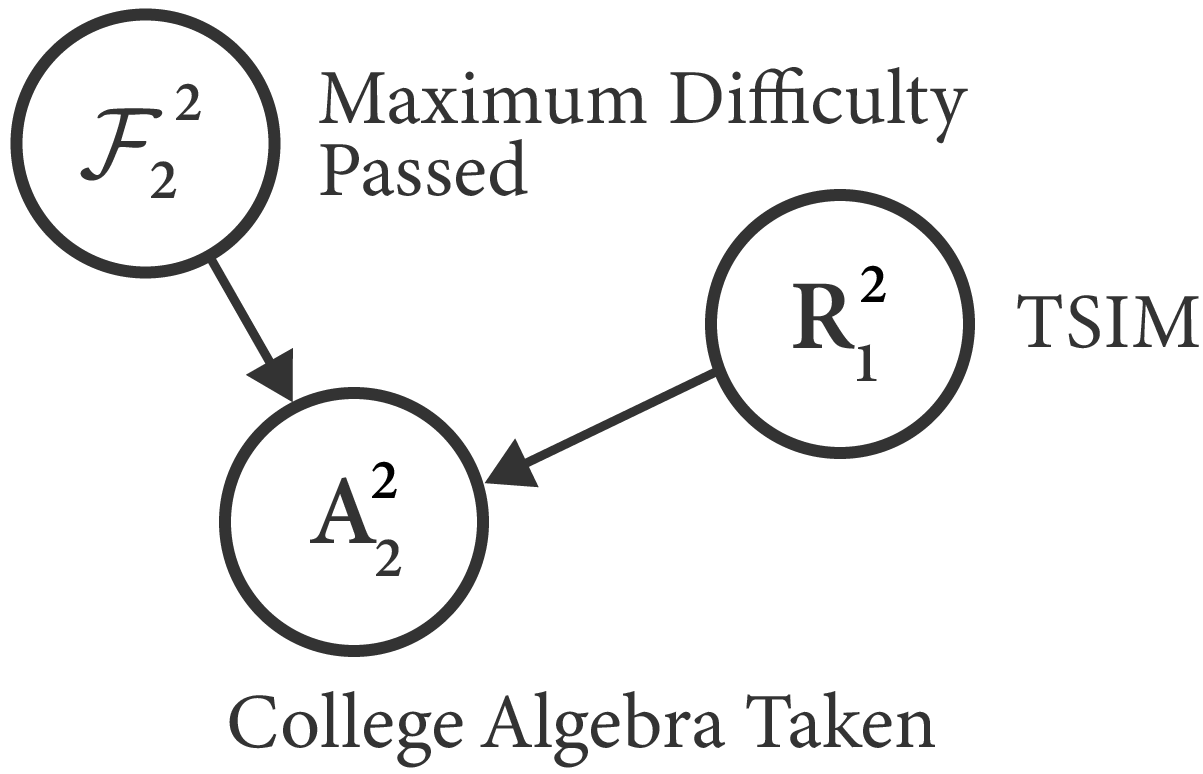
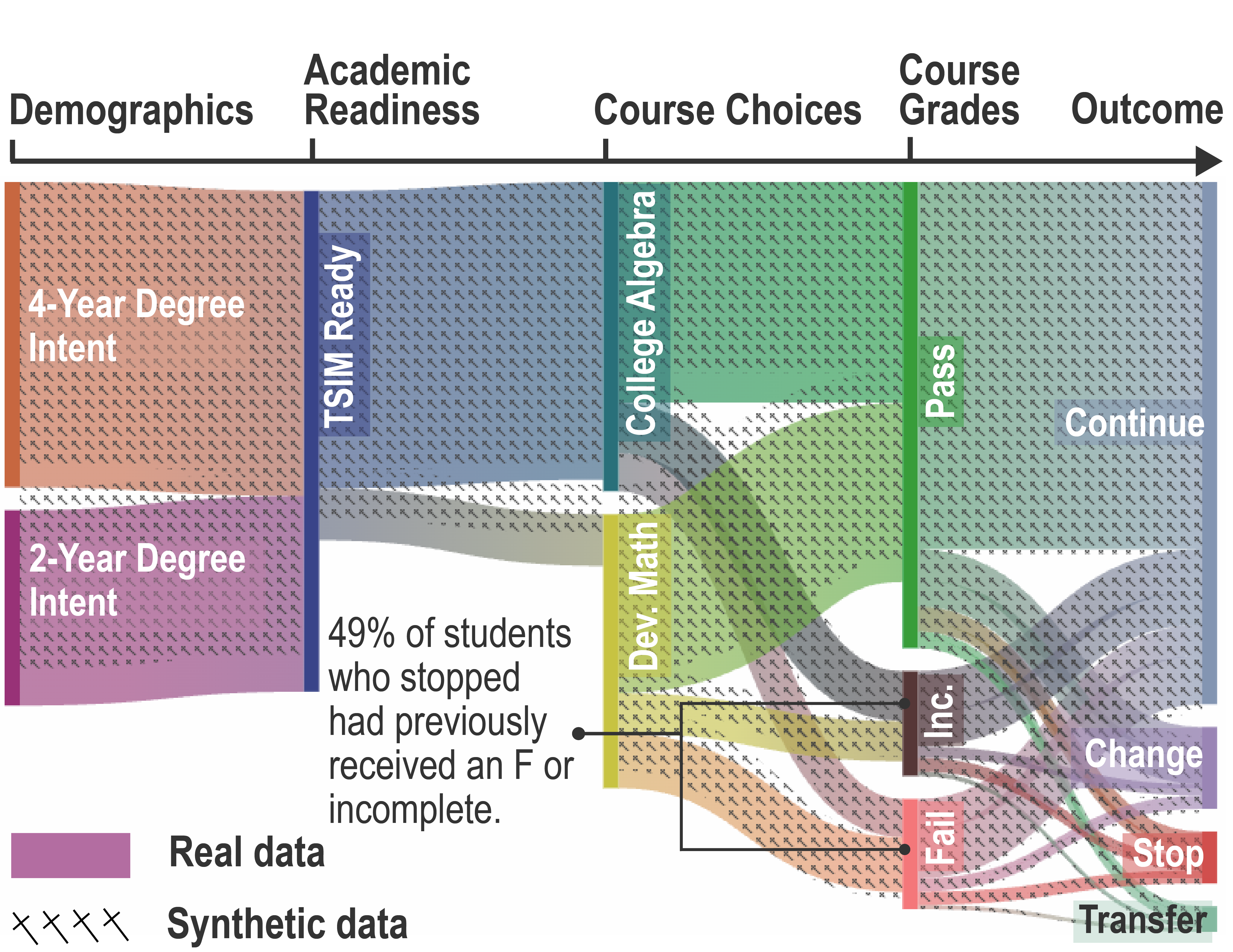
The second line of work tackles the challenges of data inaccessibility, which limits broader research and development. We develop a generative AI method that learns the statistical structure of real longitudinal pathways and produces realistic synthetic student data — enabling broader research and tool development without exposing individual records.
Relevant Publications
- Huang, L., Dhillon, I. S. and Willcox, K. E. Modeling Longitudinal Student Pathways with Explainable Generative Models. The 16th International Learning Analytics & Knowledge Conference, Bergen, Norway, May 2026. Best paper finalist.
- Huang, L. and Willcox, K. E. Educational Digital Twin: Tackling complexity in educational big data. IEEE International Conference on Big Data, Washington D.C., December 2024.
Impact
This work was supported in part by Texas Higher Education Coordinating Board (THECB) and Department of Energy grant DE-SC0021239. The opinions and conclusions expressed in this document are those of the authors and do not necessarily represent the opinions or policy of the THECB.