
Educational Digital Twin
A new paradigm for modeling educational systems at scale, across time.
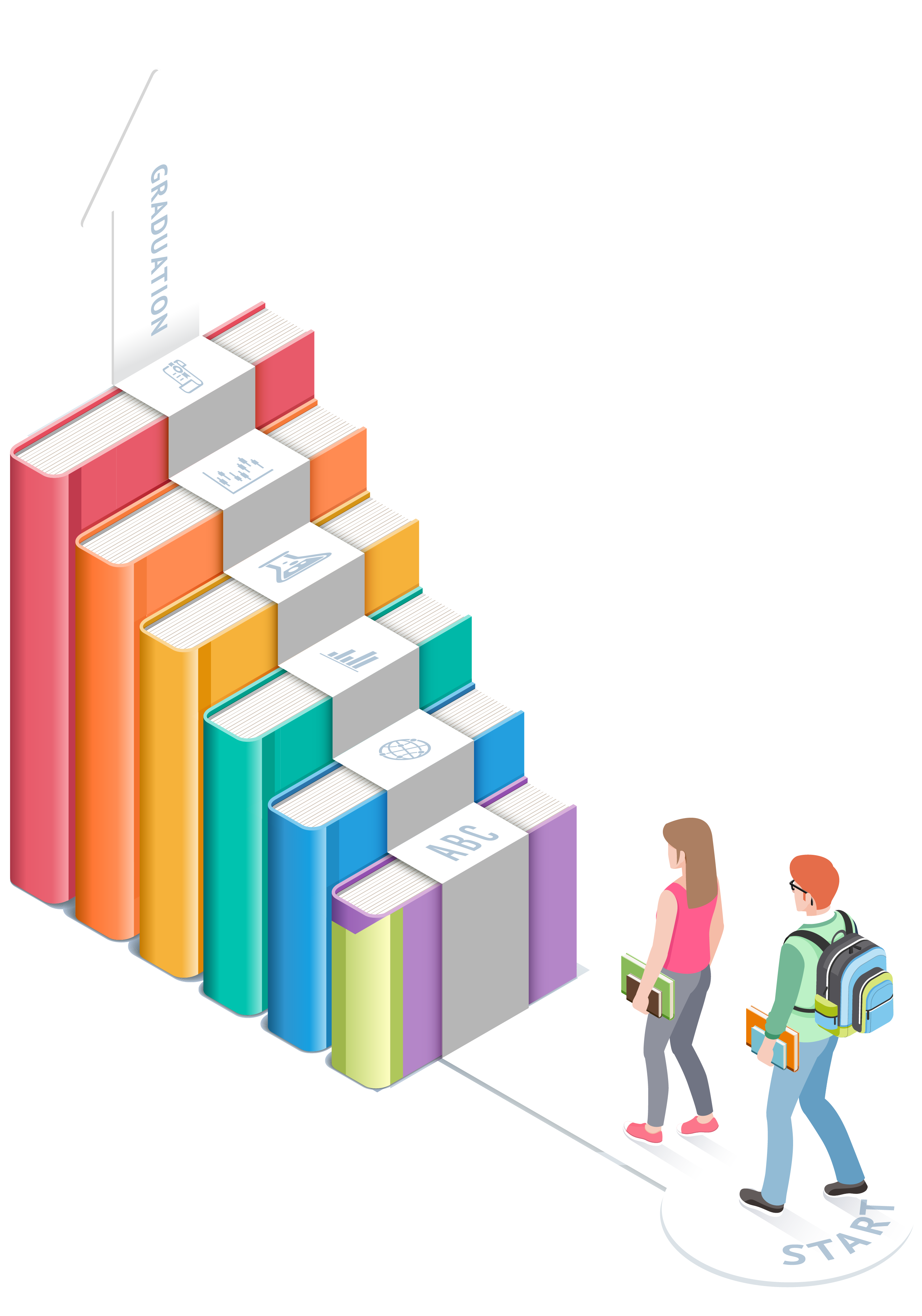
The Physical System
Education is a complex system whose components in the physical world range from learners, teachers, and institutions to grade levels and policies — all evolving through time.
To date, these physical components are often modeled in isolation and as static snapshots; for example, a university's course enrollment statistics captured at a single point in time.
The Virtual System
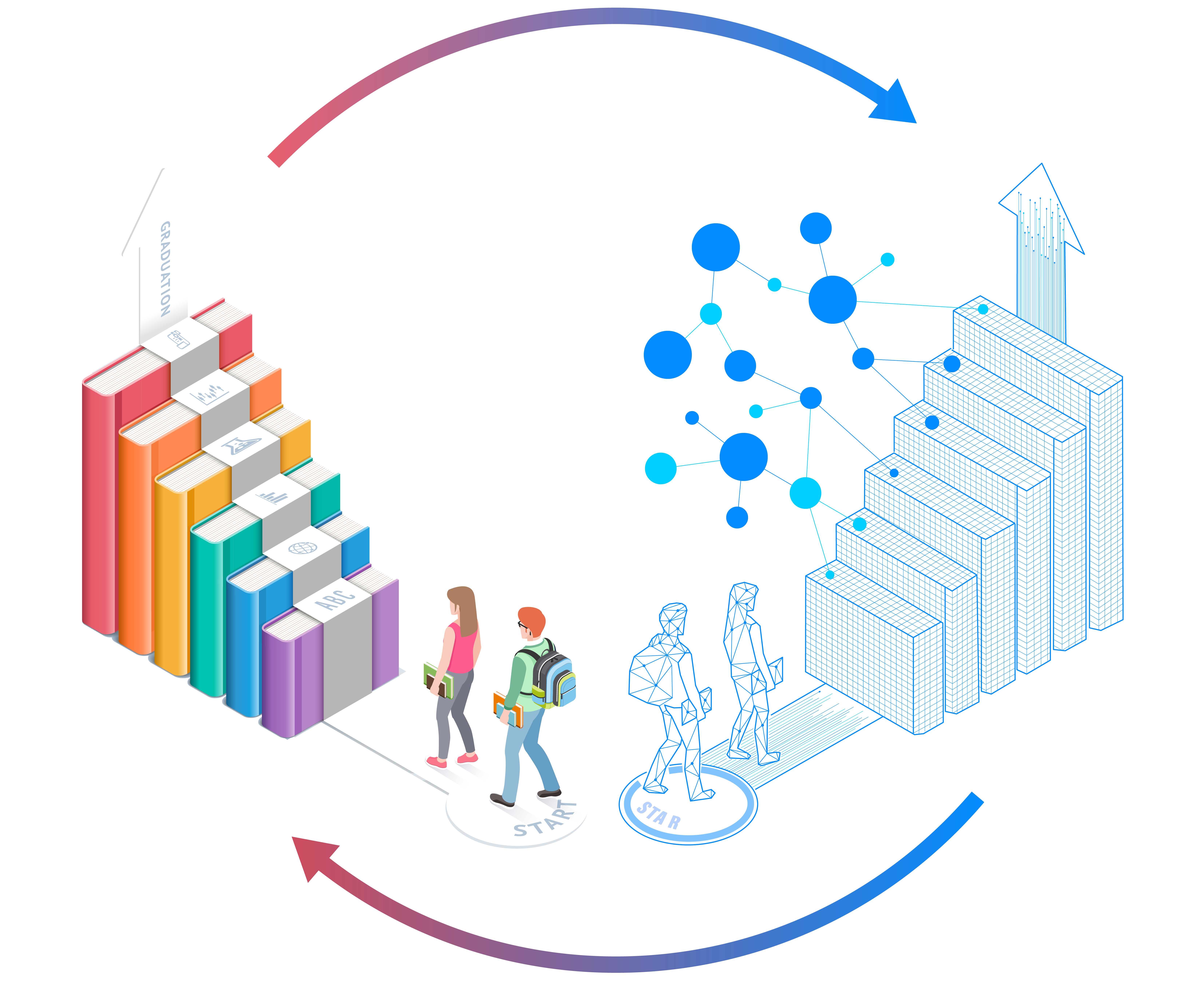
“A digital twin is a set of virtual information constructs that mimics the structure, context, and behavior of a natural, engineered, or social system (or system-of-systems), is dynamically updated with data from its physical twin, has a predictive capability, and informs decisions that realize value.” — NASEM 2023
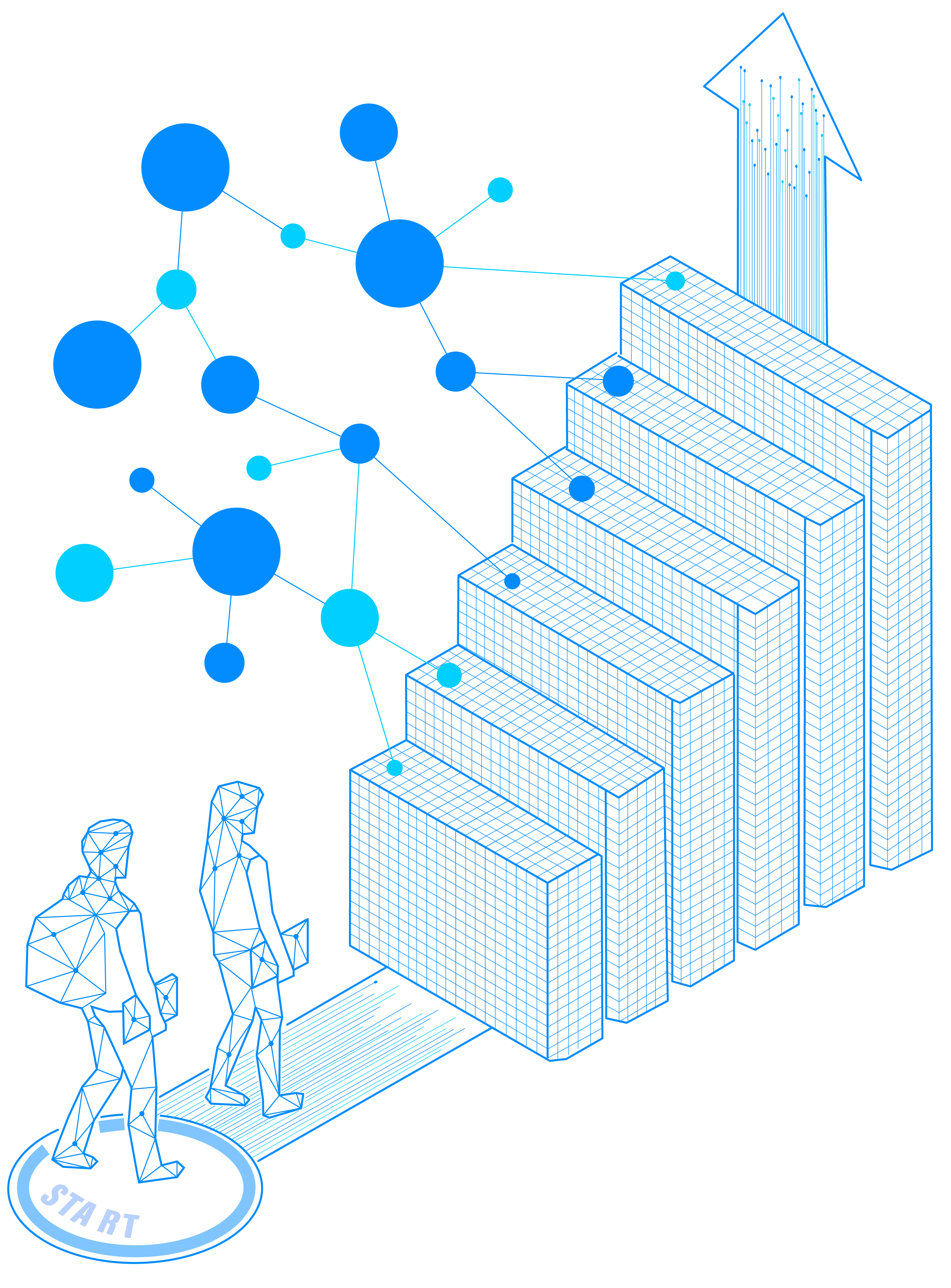
We propose an approach toward an Educational Digital Twin — a set of constructs designed to dynamically reflect and evolve alongside an educational system.
Educational Digital Twin
At the core of this paradigm is a formal, semantic graph structure that organizes educational data. By applying graph-theoretic operations, this evolving model supports efficient querying, self-updating, and representation at multiple levels of granularity.
For example, at its finest granularity, the Educational Digital Twin graph models each student's academic readiness, enrollment and dropout decisions, course attempts, declared major, and earned degree at every time step. To model at a coarser granularity level, the Educational Digital Twin graph rolls up to simulate course pathways, aggregate student behaviors and transfer rates.
Real World Impact at Scale
Educational digital twins make it possible to address pressing questions in education today — for example, detecting at-risk students early, simulating curriculum changes before they are deployed, and building adaptive learning systems that respond to a learner’s current state.